3 October 2023 Rahul Chand
This week, the United Nations adopted a resolution focused on the “protection of civilians and the upholding of legal and humanitarian obligations” concerning the ongoing conflict between Israel and Palestine. Regrettably, Fiji, along with several other Pacific Island nations, cast their votes against the resolution, aligning themselves with the positions of the United States, Israel, and the United Kingdom. In stark contrast, New Zealand and Solomon Islands emerged as pillars of principled resolve, joining over 120 nations in supporting the resolution.
The world now stands witness to the anguish and suffering of countless individuals affected by this protracted conflict. It is a time for compassion, reason, and above all, a concerted effort towards peace, ceasefires, and the delivery of vital humanitarian aid. Let us hope that Fiji and other nations re-evaluate their stance and choose to stand on the side of humanity and peace in the face of this dire crisis.”
Fiji is among a group of 14 countries in the United Nations General Assembly to vote against the resolution calling for a “humanitarian truce” in Gaza amid the Israel-Hamas war. According to the video on the United Nations page, Fiji and thirteen other countries voted against the truce, while 45 countries voted to abstain, including Australia. One hundred and twenty countries voted in favour of the humanitarian truce.
What is most puzzling of Fiji’s decision is that at one hand Fiji’s Prime Minister is championing the cause of peace by proposing the Pacific region as a conflict-free peace zone and on the other hand they vote against the restoration of peace and humanitarian aid into Gaza. Given this, the recent vote leaves me utterly bewildered. The humanitarian imperative in this situation is crystal clear – there are children, women, the elderly, and the infirm who are in desperate need of our empathy and assistance.
It is worth noting that Israel had previously imposed severe restrictions, including cutting off electricity, food, water, internet, and mobile communication in Gaza, a focal point of the conflict in Palestine. Despite this, Israel continues to bombard Gaza, launching missiles that have reduced significant sections of the country to rubble. The unfolding humanitarian crisis is a stark and painful reminder of the harrowing consequences of war. Among the casualties, it is disheartening to acknowledge that a significant number are innocent civilians, including helpless infants.
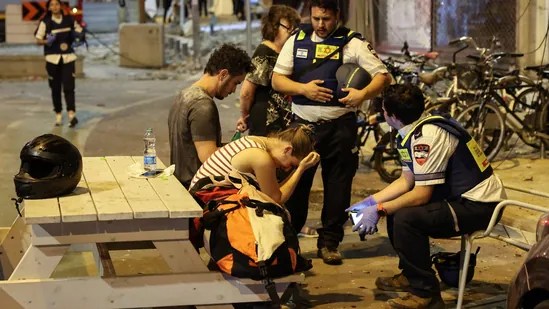
The world now stands witness to the anguish and suffering of countless individuals affected by this protracted conflict. It is a time for compassion, reason, and above all, a concerted effort towards peace, ceasefires, and the delivery of vital humanitarian aid. Let us hope that Fiji and other nations re-evaluate their stance and choose to stand on the side of humanity and peace in the face of this dire crisis.
Image Source : The Guardian
The recent clash between Israel and Hamas, initiated by a surprise attack on Saturday, represents the most recent episode in a long history of warfare and strife spanning seven decades between Israelis and Palestinians. This enduring conflict has involved external powers and contributed to instability across the broader Middle East region. In recent years, there have been several instances of conflict and violence involving Hamas and the Gaza Strip, which have often led to military exchanges and attacks. It’s important to note that the situation is complex and has evolved over time, with various incidents occurring.
The conflict involves Israeli demands for security in a historically adversarial region, counterbalanced by Palestinian aspirations for their own state. Palestinians predominantly adhere to Islam as their faith, whereas Israelis primarily identify as Jews. It’s important to note that within the Jewish community, the majority are not followers of Christianity. In Christianity, the central figure is Jesus Christ, and the faith emphasizes the belief in Jesus as the source of grace, empowerment, and moral guidance for living a righteous life.
On the other hand, Judaism, practiced by many Jews, focuses on a life of holiness achieved through the performance of mitzvot (commandments) and places great emphasis on adhering to the moral and ethical standards outlined in the Bible, particularly those concerning social justice, as articulated by the Prophets. This distinct religious perspective plays a significant role in shaping the cultural and ethical values of Jewish communities, including many Israelis.
David Ben-Gurion, the founding figure of Israel, officially declared the establishment of the modern State of Israel on May 14, 1948. This act aimed to provide a secure refuge for Jews escaping persecution and seeking a national homeland on territory to which they claim deep historical connections spanning generations. Palestinians, however, view the creation of Israel as the Nakba, meaning catastrophe, which led to their displacement and dashed their hopes for statehood.
In the ensuing war, approximately 700,000 Palestinians, constituting half of the Arab population in the British-ruled territory of Palestine, either fled or were forcibly removed from their homes. Many found refuge in Jordan, Lebanon, Syria, as well as in Gaza, the West Bank, and East Jerusalem. Israel, a staunch ally of the United States, disputes the notion that it expelled Palestinians from their homes, and it emphasizes that it came under attack by five Arab nations immediately after its establishment. The hostilities were temporarily halted by armistice agreements in 1949, but no formal peace accord was reached.
On Saturday, October 7, 2023, which coincided with the Jewish Sabbath and several Jewish holidays, Hamas, an Islamist militant group based in the Gaza Strip, initiated attacks into bordering areas of Israel. Hamas is designated as a terrorist organization by several countries, including the United States, the European Union, and Israel. The war is in retaliation of the attacks and Israel’s right to defend its country. There are several stories of heinous crimes being committed by Hamas against Israel as part of its well-planned terror attacks. Burning babies alive or beheading people are some of the many horror and most terrifying news.
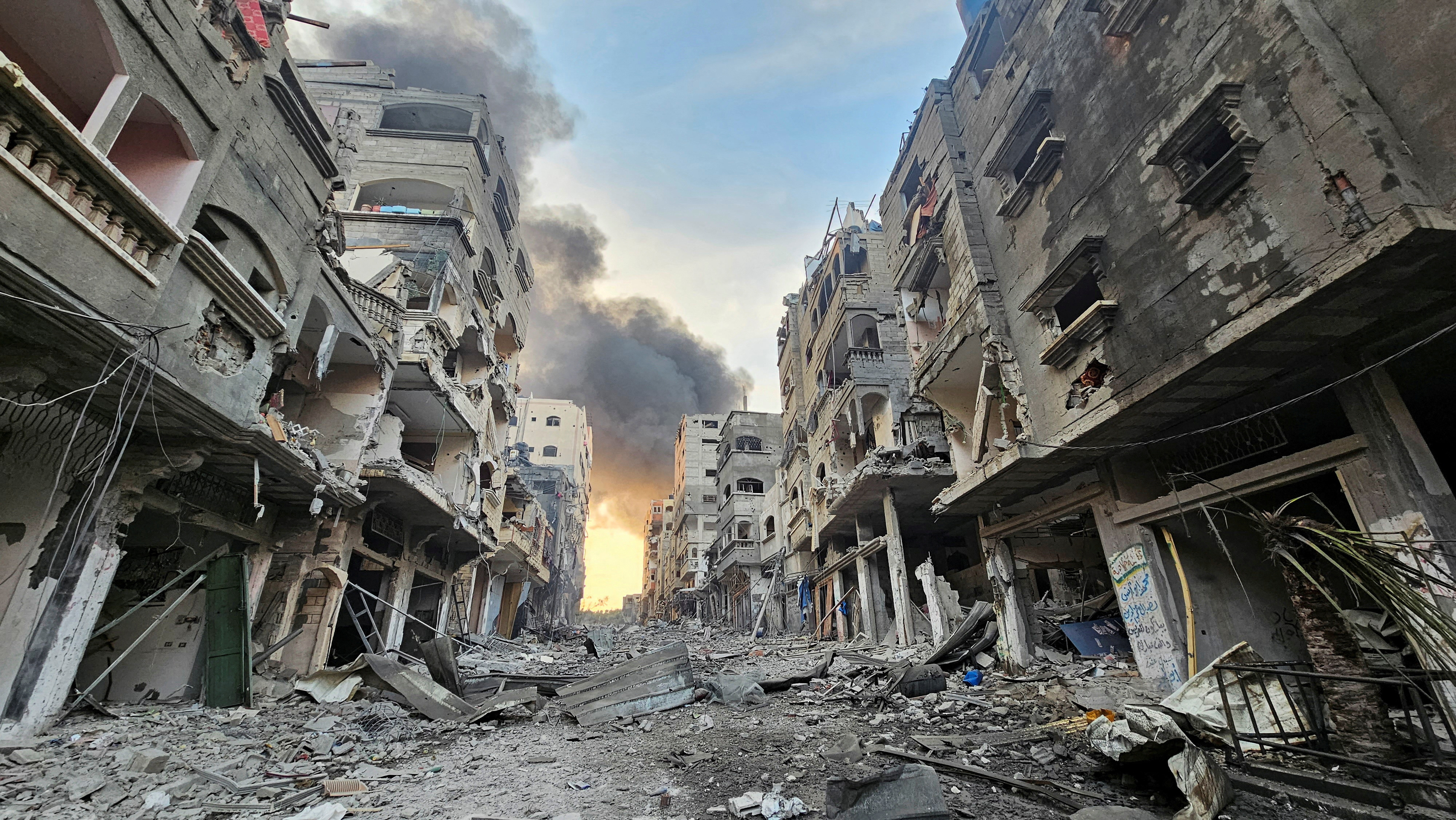
Peace cannot be negotiated by any means after the terror that was unleashed by the Hamas. Amidst all of this, the most impoverished and vulnerable individuals are at the heart of the humanitarian crisis, struggling to access their fundamental human rights, including food, water, and medicine.
Photo Source: Reuters
Therefore, the United Nations must intervene. It called for a resolution to restore peace, ensure humanitarian crisis is addressed and call for immediate ceasefire. Regardless of one’s religion and faith the current situation in the war zone of Gaza is volatile and under serious humanitarian crisis and there should be nothing to compel anyone to side with killing of innocent children, depriving ordinary citizens with basic needs such as food, water and medicine.
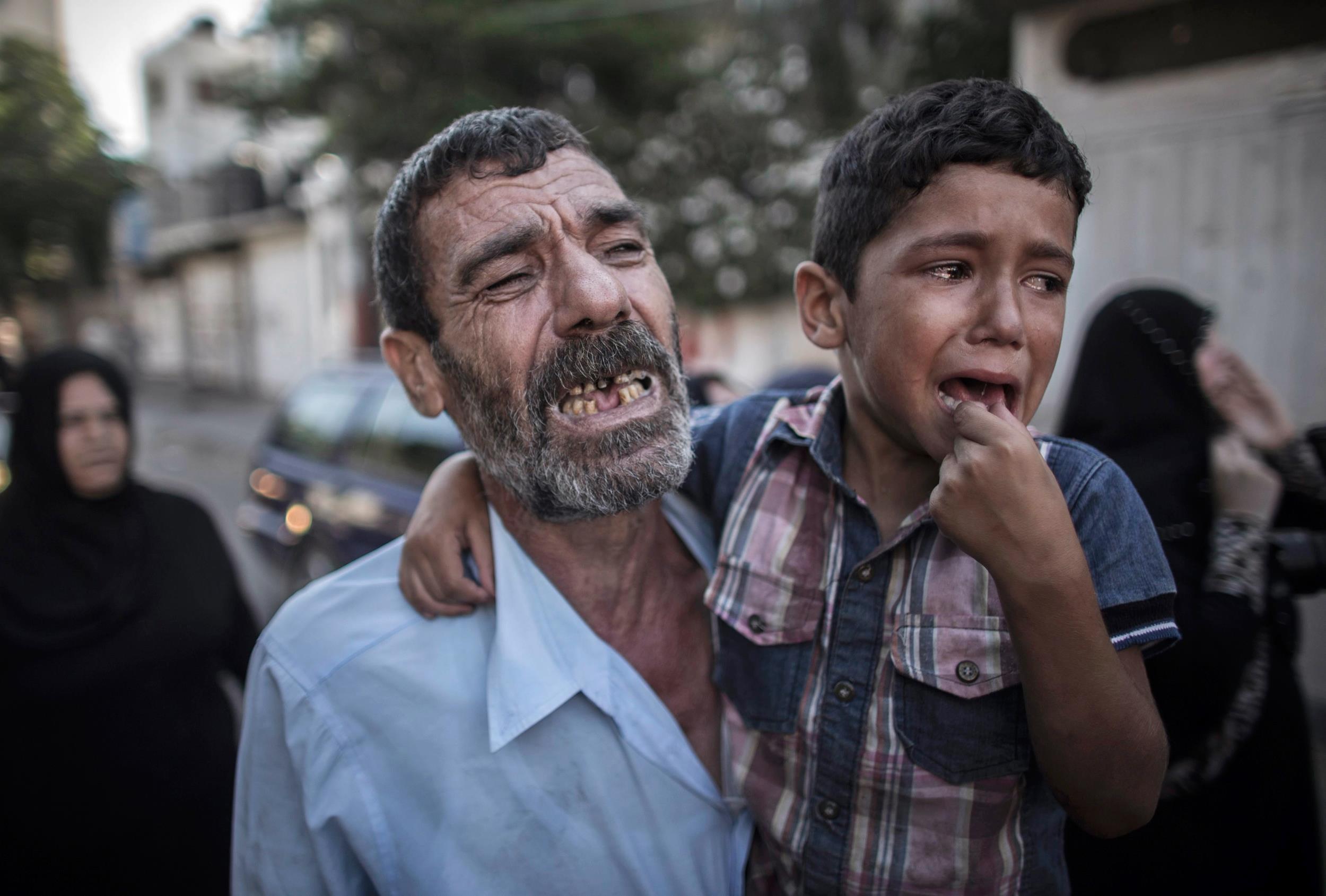
The situation in Gaza is indeed complex, and innocent civilians, including women, children, and the elderly, are often the most vulnerable in times of conflict. It is crucial to ensure that humanitarian principles are upheld and that all parties involved adhere to international law, conventions, and human rights standards. Efforts to address and bring responsible parties to justice should be pursued through lawful means, respecting the principles of justice and due process. Israel, like any other nation, must demonstrate its commitment to defending its people within the boundaries of international law, avoiding actions that may constitute war crimes.
The restoration of humanitarian aid, access to basic necessities, and safety for innocent citizens is a pressing concern in conflict zones. Mahatma Gandhi’s words, “an eye for an eye will make the world go blind” remind us of the importance of seeking peaceful resolutions and avoiding a cycle of revenge and violence.
 RahulChand